Innovation in Action: Highlights from Media Labs Days #9 in Trondheim
The 9th edition of WAN-IFRA’s Media Labs Days took place on 16 – 17 October in Trondheim, Norway. The two days event, hosted by Nxt Media, Adressa and NRK, brought together the GAMI community to explore how innovation is reshaping the media landscape. Discussions ranged from sensor journalism to XR technologies, and of course AI in the context of fact-checking or LLM’s for smaller languages.
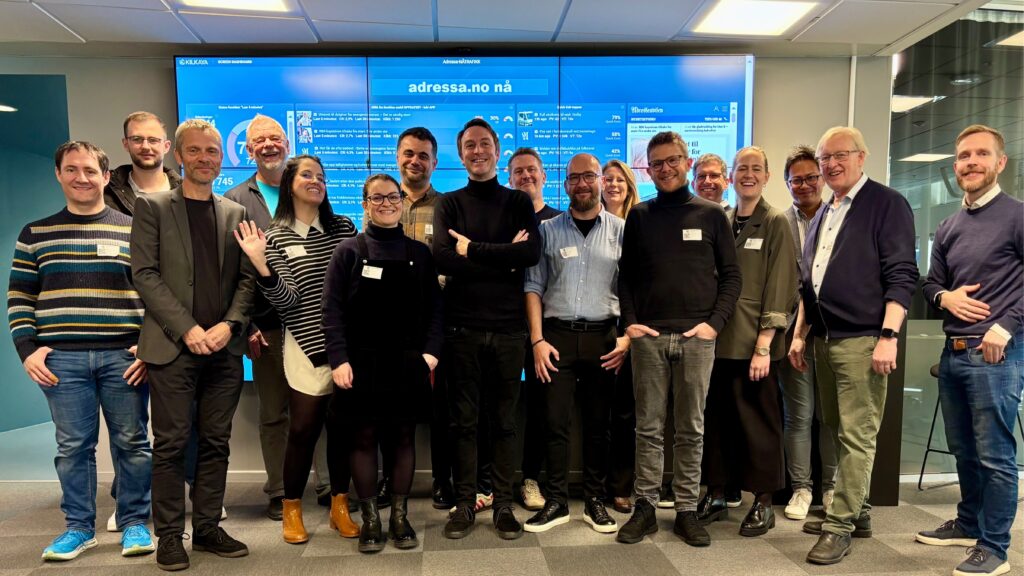
The event opened on 16 October with a warm welcome from the hosts, Christer S. Johnsen, Editor and Head of Editorial Development at Adressa, and Steinar Bjørlykke, Head of Technology and Development at NRK. They introduced participants to Trondheim’s reputation as Norway’s technological capital and set the stage for two days of discovery and exchange.
Trondheim’s Media Landscape
Christer Johnsen shared how Adressa—Norway’s oldest newspaper—has continuously evolved to stay at the forefront of technological change. “AI isn’t the answer to everything,” he noted, “but it may be the answer to move forward”. The newspaper is now integrating AI into its newsroom operations to enable faster, smarter workflows while maintaining a human-centered approach. In collaboration with national AI labs, Adressa is developing tools tailored to journalists’ needs. Johnsen also emphasized the importance of building public trust in AI to ensure its responsible and widespread use.
Beyond Human Sources: Sensor Networks in Journalism
In the afternoon, Ketil Moland Olsen, Senior Project Manager at Media Cluster Norway, explored how sensor networks are transforming journalism. This emerging approach called sensor journalism, relies on IoT devices, webcams, and telemetric data from earth, air, and sea to provide continuous, objective monitoring. “When these two worlds intersect: sensors and journalism, intriguing stories might result” said Ketil Moland Olsen. By capturing data that humans cannot easily observe, sensor networks empower journalists to uncover new insights and craft compelling, data-driven investigations. Supported by Media Cluster Norway, newsrooms of all sizes are now experimenting with sensor-based storytelling that merges technology with human curiosity.
Collaborative Approaches to Large Language Models in Scandinavia and Beyond
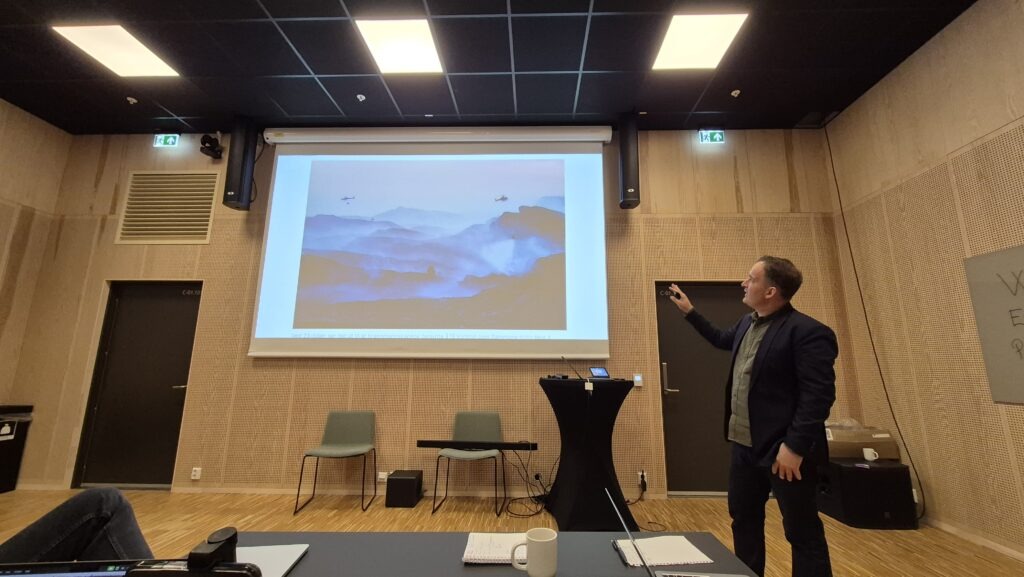
The following panel focused on empowering smaller language models in Europe. Jon Atle Gulla, Director of NorwAI and Professor Department of Computer Science at Faculty of Information technology and Electrical Engineering at NTNU, opened the panel by explaining the value of developing Norwegian LLMs. Creating a national model would not only better represent Norwegian culture and language but also ensure copyrighted material is used responsibly, in collaboration with the rights holders rather than through international models.
The Norwegian Center for research-based innovation, hosted by NTNU focuses on applied AI research with the goal of creating a transparent and ethical Norwegian alternative to large international LLMs. The center found that incorporating Norwegian-language and copyrighted data significantly improved model quality. However, they also found out that training a smaller LLM from scratch is difficult and isn’t as robust as international LLMs. Jon Atle Gulla highlighted: “When pre-training an existing international model with national training data, it produced models that perform better than the international models for this particular language”
To complete this session, Saskia Lensink, Product manager at GPT-NL in The Netherlands and Partner in the project Trust LLM, highlighted the public concerns about big tech companies’ use of personal data. She presented TrustLLM, a European initiative aiming to develop a trustworthy LLM, targeting Germanic Languages. Saskia Lensink also introduced GPT-NL, an LLM built from scratch using Dutch and English content that is legally cleared for AI training. “We are collaborating with NDP Nieuwsmedia who represent the vast majority of Dutch news publishers to further develop GPT-NL, the first large-scale Dutch AI language model trained entirely on legally obtained data.” she said. “We were quite surprised to learn that we are the first AI initiative to achieve this kind of partnership with news media companies—and we hope to inspire others.”
News from our Labs
Participants also had the opportunity to learn more about the work of three labs from WAN-IFRA’s the Global Alliance for Media Innovation community.
Markus Franz, CTO & Incubator Lab Lead at Ippen Digital, presented the company’s AI-driven innovation lab. The group, one of the biggest in Germany, initiated The.Lab focused on AI-driven transformation, experimenting with multi-agents systems to accomplish specific editorial tasks. “At Ippen Media, we look at how intelligent collaboration between humans and agents can reshape the way we work, create, and make decisions.” An interesting talk emphasizing what role we humans will play in this new ecosystem.
From Portugal, Ana Marta Flores, Coordinator of iNOVA Media Lab at NOVA University Lisbon, showcased the lab’s interdisciplinary work at the crossroads of theory and practice. iNOVA Media Lab explores new methodologies for media research through digital media, combining academic inquiry with practical experimentation.
Closing the session, Alexander Rühl, Team Lead Marketing at Media Lab Bayern, gave us a thorough update on their innovative cluster supporting startups and media professionals in Munich and Ansbach. The lab strengthens the media ecosystem through funding programmes, training events, networking opportunities, and a range of publications including reports, newsletters, and podcasts.
Together, these labs illustrate the diversity and vitality of innovation across the GAMI network—from academic research to startup incubation and large-scale newsroom transformation.
GAMI Incubator #Finland
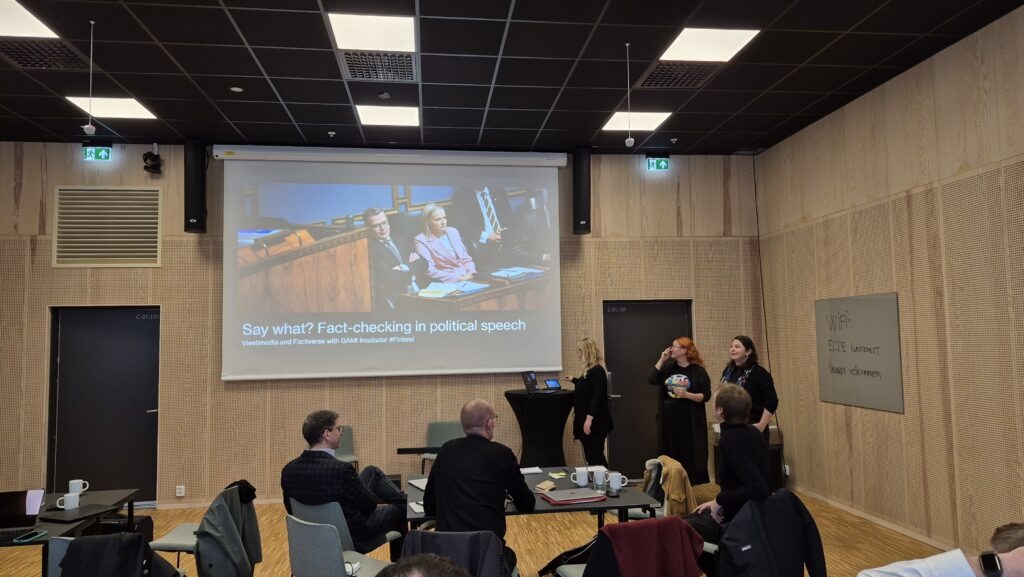
The day ended with the presentation of a new WAN-IFRA innovation programme: GAMI Incubator #Finland. The programme, which officially kicked-off on 29 – 30 September brings together three Finnish media companies and three international startups for a collaborative six-month journey exploring and experimenting with new ideas and technologies. Taru Salo, Head of Digital Development, Data & AI and Laura Ihalainen, Creative Development Manager and Journalist, both at Viestimedia presented the challenge they are working on: Increasing/Maintaining public trust during political campaigns by tackling misinformation. To address this challenge, the Norwegian startup Factiverse, is bringing its AI-powered fact-checking technology. CEO and Co-founder of Factiverse Marie Amelie expressed enthusiasm for the collaboration, noting that “this partnership with Viestimedia would not have happened outside of the programme.”
Transforming NRK for the Digital Era
Pål Nedregotten, Director of Technology at NRK, opened the second day by outlining three major challenges in transforming a legacy broadcaster into a modern digital organization. The first challenge is a massive infrastructure change, moving from 1960s buildings to new, flexible, software-defined facilities that support remote access and digital workflows. The second is upskilling: adapting teams to rapid technological change, new forms of competition, and evolving security needs. “This is probably the hardest leadership task facing us today across the industry,” said Pål Nedregotten. “We need to own the strategy and build an organization that is equipped and empowered to handle the tactics.” The third and most vital challenge, he added, is remaining relevant to Norwegian audiences despite the competition faced from social media.
Sense IT: Exploring Sensor-Based Storytelling
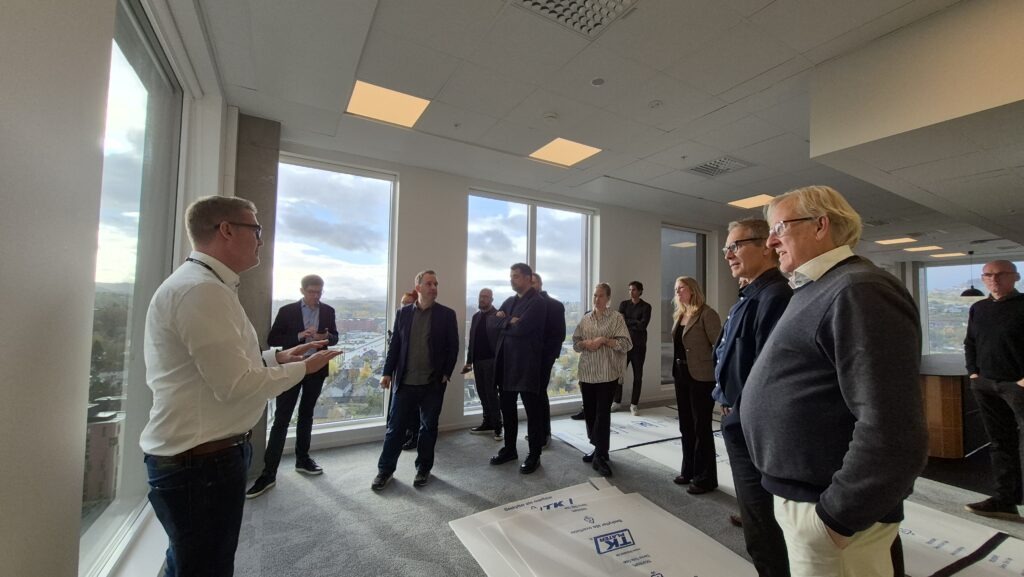
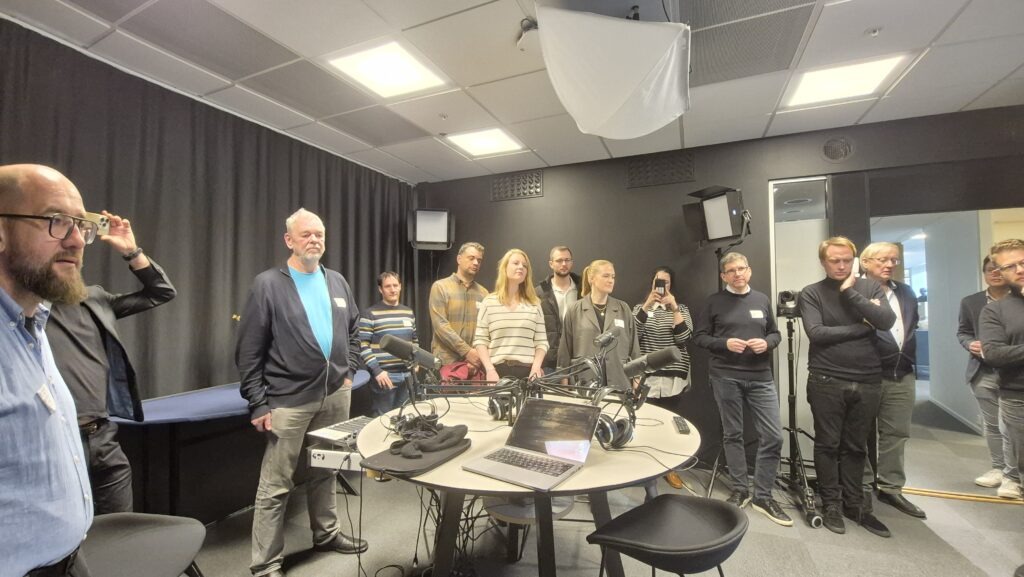
Andrew Perkis, director of NTNU Sense-It lab, presented the work of its lab, called Sense IT which combines art and technology to explore “sensor-based storytelling” and interactive digital narratives. Sense IT researches how to measure and enhance audience perception and emotional response using sensors and extended reality (XR) technologies. The lab maintains a long-term collaboration with NRK on media technology, education, and innovation, including experiments with XR teleportation and 3D avatars in broadcasting. Following up on the subject, Steinar Bjørlykke, Head of Technology and Development at NRK then shared how they have been pioneering XR technology for over two decades. The broadcaster was among the first in Norway to implement virtual studios, each designed for multiple sets and creative flexibility—demonstrating how traditional broadcasting continues to merge with cutting-edge innovation. Bjørlykke also explained how even the new building’s design fosters collaboration between departments. Built using standardized architecture—consistent with other NRK facilities across Norway—it allows for streamlined technology management nationwide. The flexible workspaces and XR production capabilities illustrate NRK’s commitment to future-ready broadcasting environments.
Both days sessions were completed with exciting visits of NRK’s brand-new premises and Adressa’s newsroom. An inspiring close to two days of collaboration, experimentation, and future-focused dialogue.
Looking Ahead: Collaboration as the Engine of Media Innovation
The ninth edition of Media Labs Days in Trondheim showcased the power of collaboration, curiosity, and experimentation at the heart of media innovation. Across two days of presentations, discussions, and hands-on exchanges, participants explored how technology—from AI and sensor journalism to XR and local language models—can be shaped to serve people, culture, and trust in journalism.
What united every session was a shared conviction: innovation in media is not just about adopting new tools, but about building meaningful, ethical, and transparent systems that strengthen journalism’s role in society. From Norway’s AI-driven newsrooms to Europe’s homegrown LLM initiatives and the creative labs empowering startups and researchers, the event demonstrated that progress happens when communities work together across disciplines and borders.
As the GAMI network continues to grow, Media Labs Days #9 reaffirmed its purpose—to connect innovators who believe in a smarter, more human-centered future for media.