Making media–startup collaborations work: lessons from Marseille
Media–startup collaborations don’t fail because of bad technology. They fail because of bad strategy, diluted ownership, and organizations that aren’t truly ready to change. So what turns experimental collaborations into real outcomes?
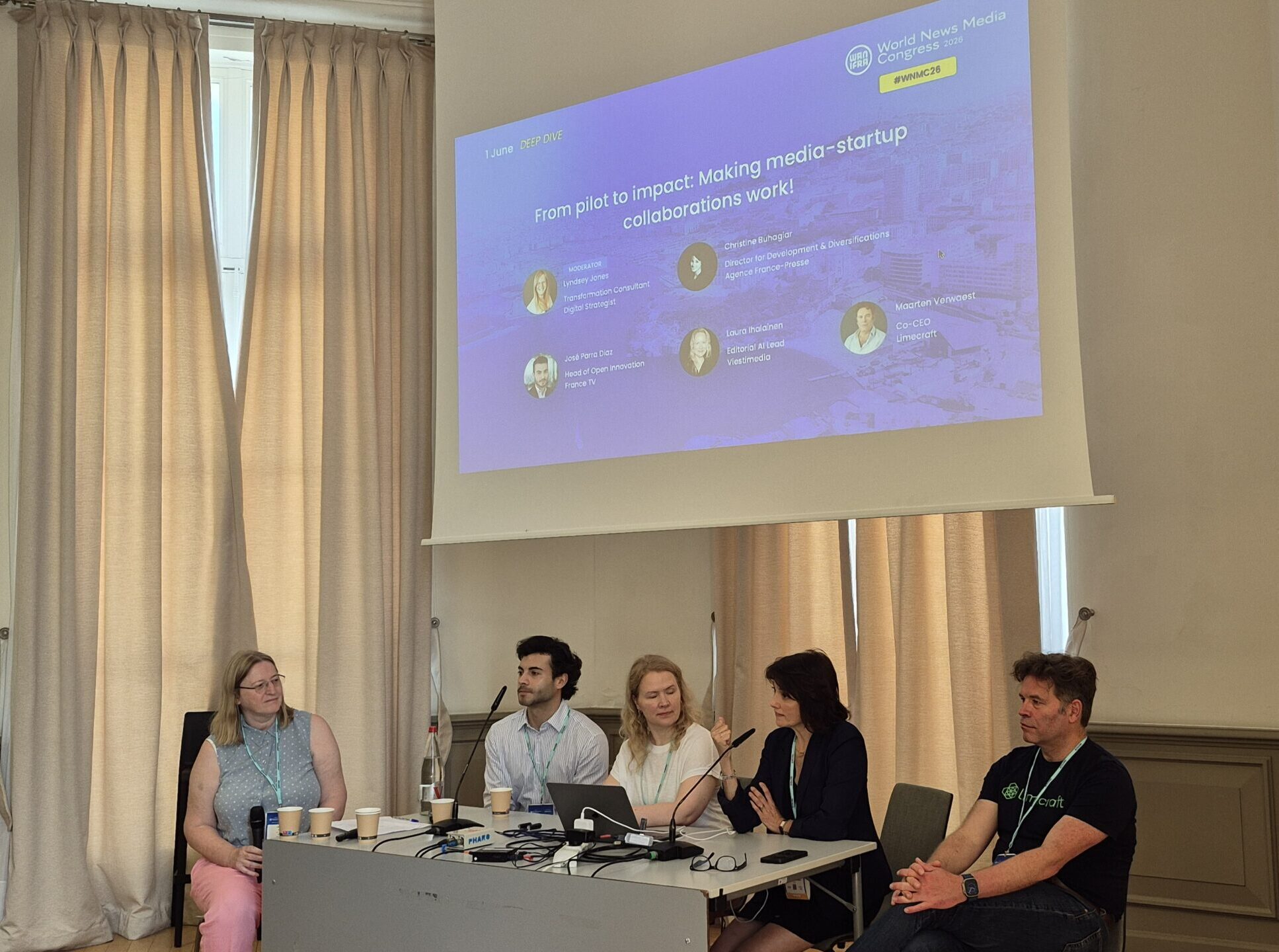
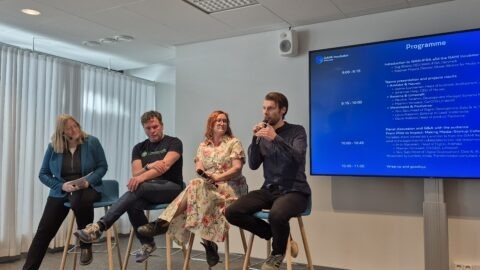
Last week at the 77th World News Media Congress in Marseille, during a session moderated by Lyndsey Jones, Transformation Consultant, Digital Strategist, panelists shared their experience from media innovation projects, startup partnerships and European collaborative initiatives. Here’s some takeaways of their discussions:
Planning and setting clear goals
Three panelists converged on this point from different angles. José Parra Diaz, Head of Open Innovation, France TV, argued that the foundation of any successful collaboration is trust, treating the startup as a partner rather than a provider, and building a genuinely win-win dynamic from day one. Maarten Verwaest, Co-CEO of Limecraft, a Belgium startup tech company, added that strategy mattered more than technology: “The real challenge is identifying the critical problem to solve and to focus resources accordingly” he said. Christine Buhagiar, Director of Development and Diversifications, Agence France Presse (AFP), brought a third perspective through the EU funded ChatEurope project: she noted that a clear framework, with concrete goals and deadlines help partnerships move forward and accelerate implementation: “Finding external funding and working with others forces you to escape internal politics, to explain your concept clearly, and to justify the public money spent.”
Bringing everyone into the process early
José Parra Diaz noted that implementing a technology project requires identifying internal ambassadors: people who genuinely believe in the project and will be able to carry the project through potential internal bottlenecks. Maarten Verwaest added that sceptics should be brought in from the start too, in order for their questions to be addressed and a shared direction established. Laura Ihalainen, Editorial AI Lead at Viestimedia (Finland), acknowledged that journalists are often reluctant to adopt AI in their daily workflows, but noted: “You just need that one person who wants to be involved.” She also underlined the importance of gathering all relevant stakeholders around the table early in the process.
Secure strong leadership support from the outset
Maarten Verwaest highlighted the critical importance of top management buy-in from the very beginning of any project. Laura Ihalainen equally stressed that support from senior leadership is crucial for innovation initiatives to succeed.
Building journalistic skills and expertise through collaboration
Media–startup collaborations offer an alternative to dependence on large tech companies, while helping newsrooms develop new capabilities. Laura Ihalainen presented Renki, an internal toolkit built for Viestimedia’s journalists that started as a spell-checking tool. Thanks to a partnership with the Norwegian tech startup Factiverse and through the WAN-IFRA GAMI Incubator #Finland programme, it now also supports fact-checking of articles and videos: a concrete example of how these collaborations can easily develop and expand what a newsroom can do.
Don’t wait for perfection
Panelists agreed on the need to start early, test quickly, and resist the pull of perfectionism. Christine Buhagiar put it plainly: “Be fast, simple, accept it is not perfect from the start, otherwise you may be outdated once perfection is reached”; Laura Ihalainen’s message was equally direct: “Don’t go for perfection.”
Technology is rarely the issue. What determines whether a media–startup collaboration succeeds or fails is much more human: clear goals, the right people around the table, and leadership that genuinely backs the project. The examples shared in Marseille were a reminder that newsrooms don’t need to be perfect to move forward, they just need to start.
Read more about the GAMI Incubator #Finland Programme here.