Baraza Media Lab: Building Trust, Community, and Innovation in Kenya’s Media Ecosystem
In the heart of Nairobi, Baraza Media Lab has grown into a vibrant hub where media, creativity, and community intersect. Founded in December 2019 with support from Luminate — a global foundation working to ensure that everyone has the information, rights, and power to influence the decisions that shape society— the lab emerged from research that exposed deep challenges facing Kenya’s media landscape: declining revenues, political influence, dwindling public trust, and a lack of innovation.
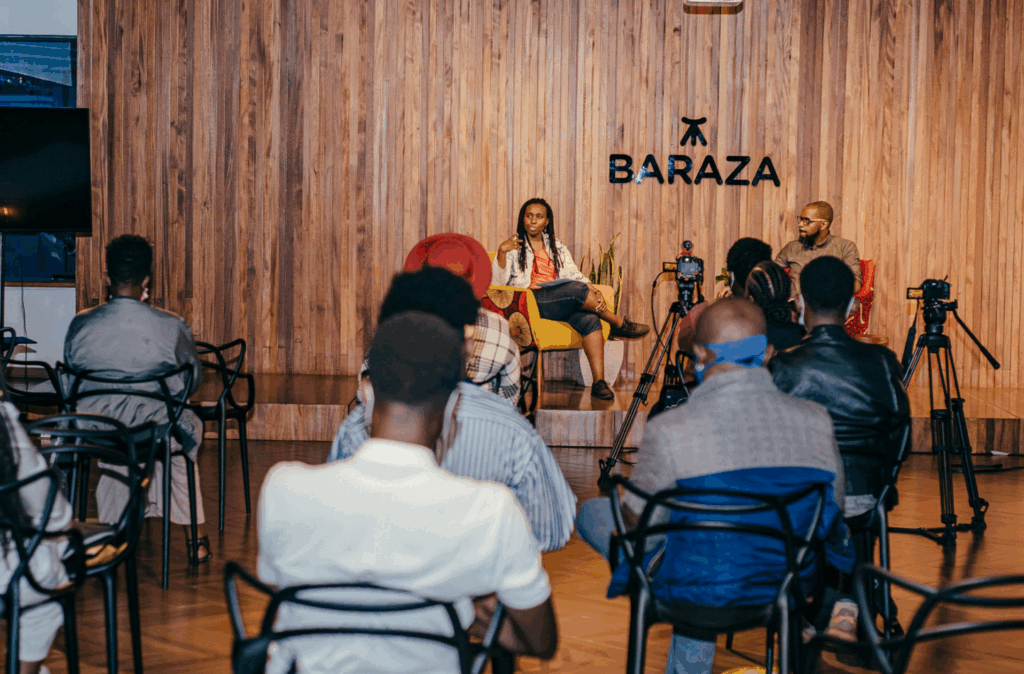
Rather than prescribing solutions from the top down, Baraza invited journalists, creatives, and civic actors to co-create responses. The outcome was a physical space dedicated to training, research, convening, and incubation—all aimed at strengthening media’s role in democracy and civic life.
A Community-First Approach
For Executive Director Maurice Otieno, community is the lab’s driving force. Baraza acts as a connector, often playing a coordinating role to amplify the work of others rather than competing with them. Its unique structure includes a curation team that listens to community needs and transforms them into programs, events, and research. Once these experiments mature, the programs team institutionalizes them for long-term impact.
This approach ensures Baraza’s work remains responsive, collaborative, and grounded in local realities. With five locations across Kenya, the lab also maintains close ties with local communities through “community associates” who surface grassroots needs.
Innovation Beyond the Newsroom
At its core, Baraza experiments with new ways of sustaining journalism and media innovation. From testing alternative subscription models to exploring audience-centered content strategies, the lab probes questions like: What if readers could pay per article instead of subscribing? How can media outlets personalize content to better reflect diverse interests?
Such experiments aim to future-proof media business models while ensuring content remains relevant to audiences.
Measuring Impact Differently
Traditional metrics—circulation, ad revenue, or audience size—do not capture the lab’s real impact. Instead, Baraza is developing new success indicators: mental well-being of journalists, safe spaces for women, or civic engagement by creatives. The lab combines quantitative data with stories of lived experience to demonstrate value to funders and partners.
As Maurice notes, “Community is the one thing that everyone needs, but nobody pays for—until they need it.” Capturing this intangible value is central to Baraza’s mission.
Navigating Challenges and Failures
Like many young organizations, Baraza has faced hurdles. A costly attempt to build a digital marketplace for creative talent failed, teaching the team the value of testing simple solutions first before investing in complex platforms.
Similarly, cultural dynamics sometimes complicate program delivery. In Kenya’s coastal regions, for instance, patriarchal norms limited women’s participation in trainings. Baraza adapted by engaging men as allies and rethinking facilitation approaches. These lessons reflect the lab’s willingness to embrace failure as part of innovation.
Sustaining the Future
Although philanthropy remains Baraza’s primary funding source, the lab is experimenting with membership models, event hosting, commissioned research, and convenings to diversify revenue. The long-term goal is an 80/20 model: 80% self-generated income, 20% philanthropic support.
Looking ahead, Baraza envisions becoming a regional knowledge hub for media and creative innovation in Africa—rooted in research, grounded in community, and financially sustainable.